
BY LESLEY FOINAGWA IN WEST KWAIO, MALAITA PROVINCE
Forty-year-old Vincent Sudafi of West Kwaio, Malaita Province, is working hard to turn seaweed farming into a better source of income for his family.
Sudafi, a father of nine, started farming seaweed in June 2026. He began with three long lines and now hopes to increase them to six as he gains more experience.
His first step into seaweed farming came with help from his cousin, who gave him 100 nursery seaweed plants. But each long line needs about 100 nursery plants, meaning he needed around 300 plants for his three lines.
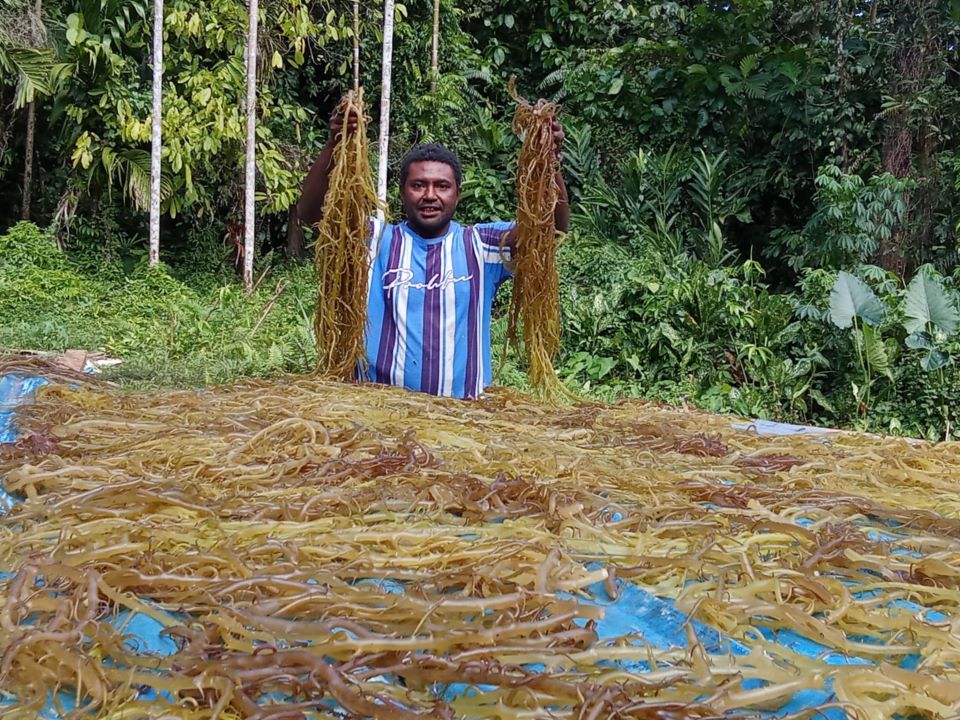
Despite starting on a small scale, Sudafi has already harvested about 20 lines of seaweed from his first planting. He said seaweed normally stays in the sea for about six weeks before it is ready for harvesting.
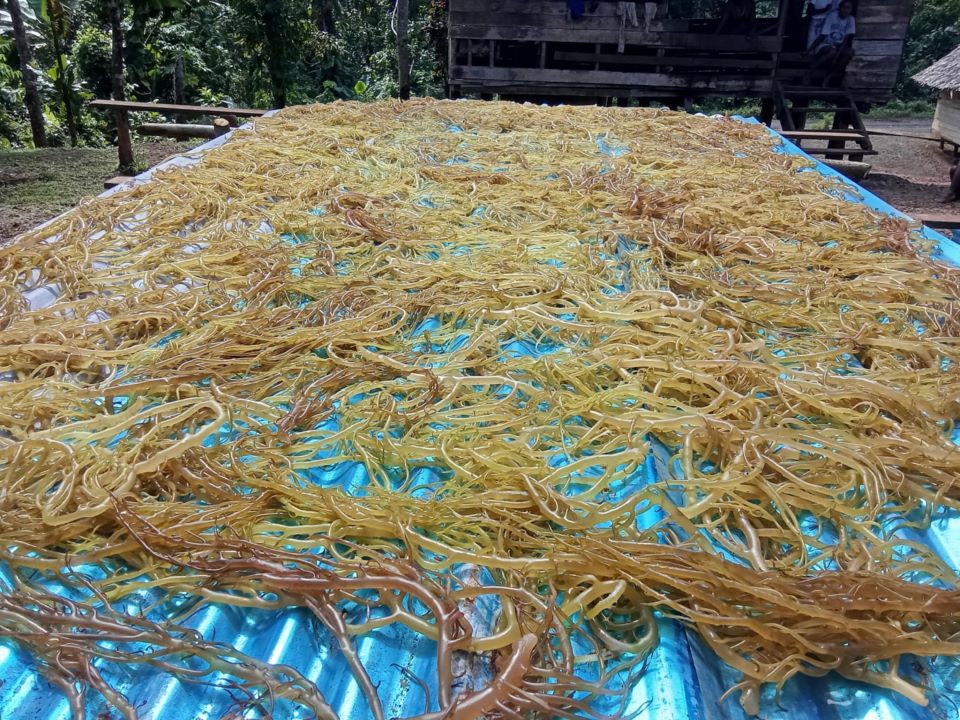
At the moment, he is focused on drying his harvest before deciding where to sell it.
“I know that other farmers have already sold their seaweed to the association, while I am still focusing on drying mine,” Sudafi explained.
The Taba’a Seaweed Association currently offers about SBD7 per kilogram. While the price has encouraged him to continue farming, Sudafi is also looking for other buyers who may offer a better price.
He explained that the weight of seaweed changes during drying. Fresh seaweed can weigh about 50 kilograms in a bag, but the weight becomes lower after the water is removed.
Sudafi usually plans to dry his seaweed for about three days when the weather is hot and sunny. During rainy or cool weather, however, drying can take longer.
“Most of the time, I spend my time drying the seaweed,” he said.
Sudafi is currently farming independently and is not a member of the Taba’a Seaweed Association. One of his biggest challenges is getting enough ropes to expand his farm.
“I need help with ropes such as two-millimetre, six-millimetre and even 10-millimetre ropes,” he said.
Even with these challenges, Sudafi believes his farming location is suitable for seaweed production. He said his plants appear to grow quickly compared with those in some other areas.
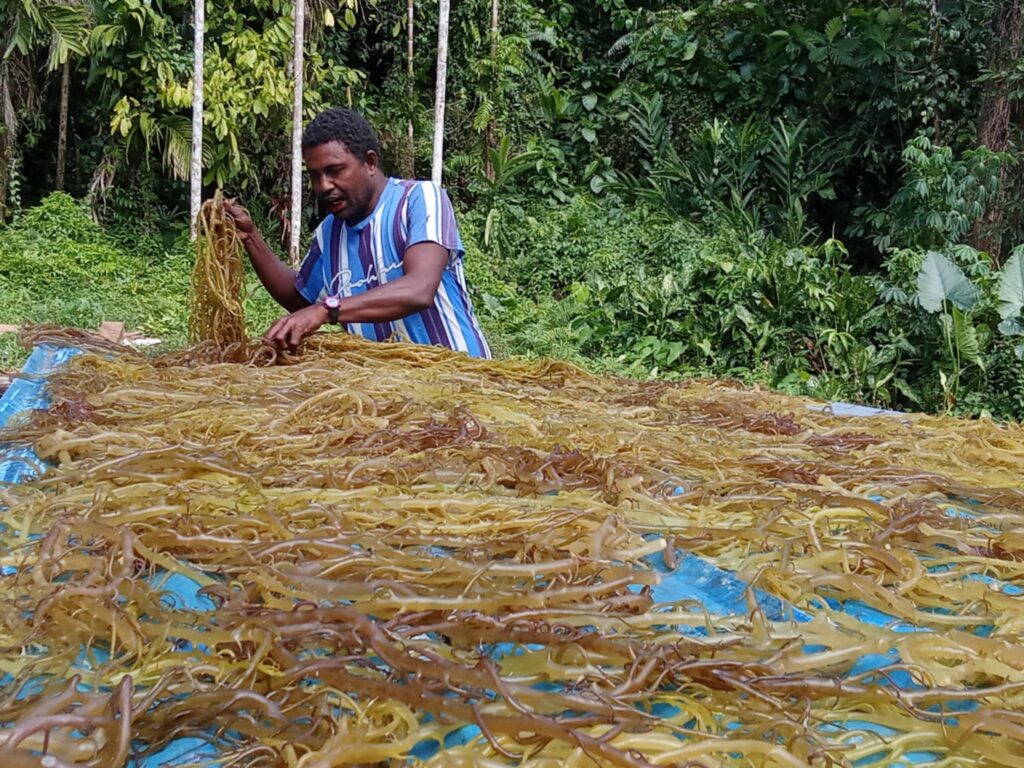
“My area is very good because I find that my plants are growing very quickly when I compare them with other areas,” he explained.
Regular care is also important. Sudafi visits his farm to clean the seaweed and remove damaged plants. Strong winds can cause the seaweed lines to coil and break, so he needs to check them regularly.
After completing his first harvest, he plans to move more nursery plants into the sea and increase the size of his farm. He hopes to complete the current harvesting process next week and expand from three long lines to six.
“My aim is that since I need more from it, I need to sell it and at the same time buy many more ropes so that I can continue planting more seaweed and make my plantation bigger in the future,” he said with a smile.
Sudafi also encouraged other farmers to remain committed and give enough time to their farms.
“When you decide to enter seaweed farming, you must sacrifice your time to look after it well,” he said.
He advised farmers to choose their farming locations carefully and avoid placing seaweed farms too close to reefs, where fish, turtles and other marine animals may damage or eat the seaweed.
For Sudafi, seaweed farming requires willingness, patience and regular care.
Although he started with only a few lines, he now has a bigger goal. With more ropes, nursery plants and continued hard work, Sudafi hopes to build a larger seaweed farm and create better opportunities for his family.
His story shows that a small beginning can grow when a farmer is willing to work, learn and remain committed.