
By Eddie Osifelo
Nadi, Fiji
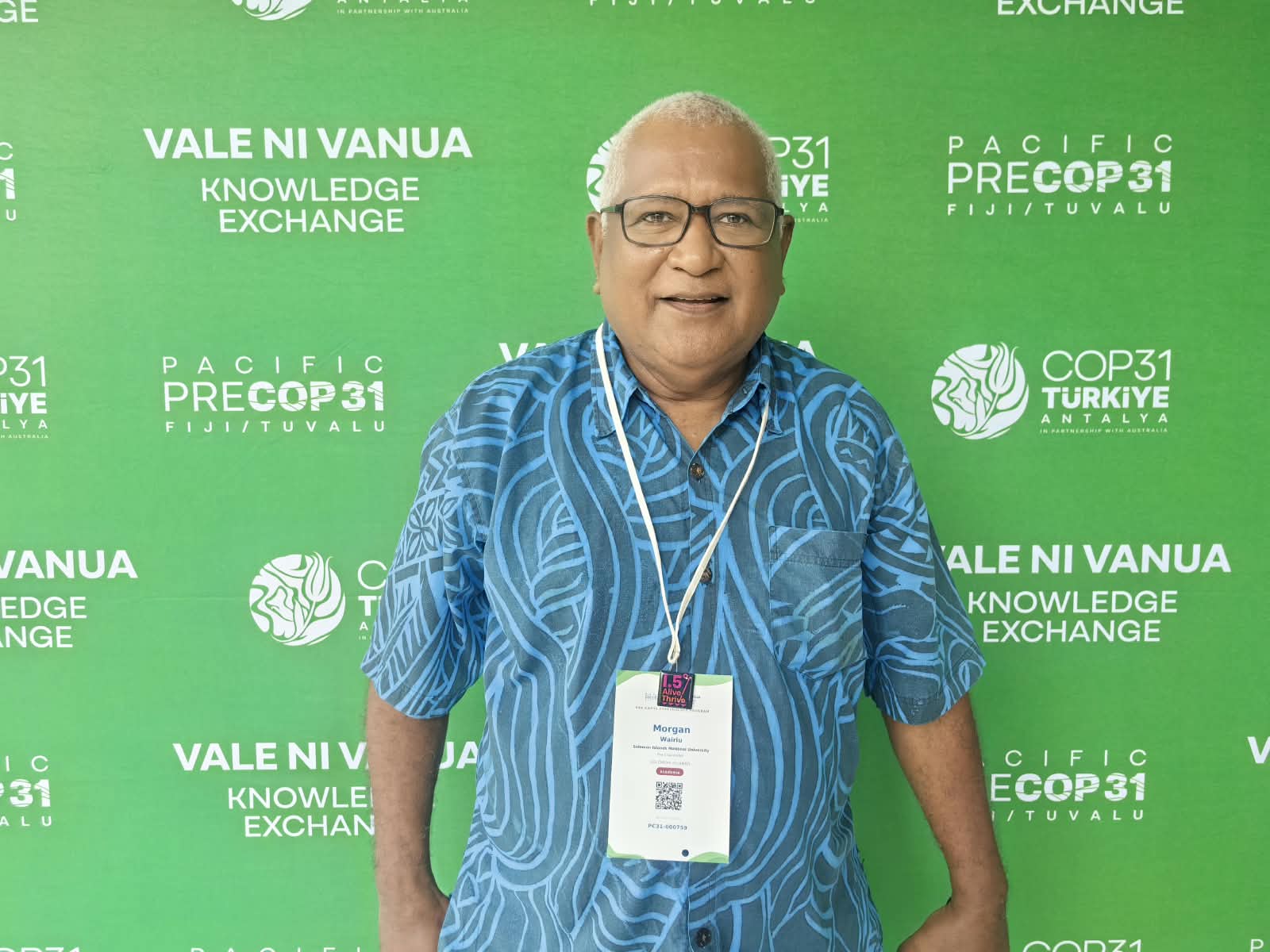
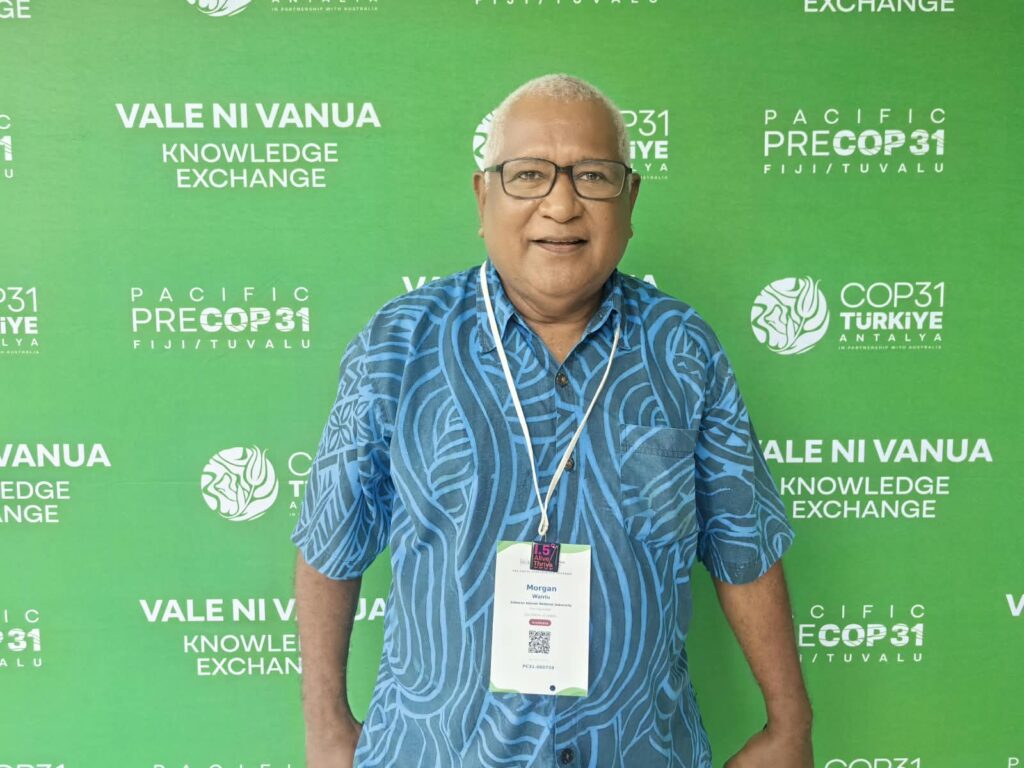
Solomon Islands National University (SINU) Pro-Chancellor Dr Morgan Wairiu says the Pre-COP31 meeting in Nadi, Fiji, provides a critical opportunity for Pacific Island countries to shape key climate priorities ahead of the COP31 negotiations in Türkiye.
The official Pre-COP31 meetings are being held from October 5 to 8 at the Sofitel Fiji Resort & Spa, Sheraton Fiji Golf & Beach Resort on Denarau Island, and the Crowne Plaza Fiji Nadi Bay Resort & Spa along Wailoaloa Beach.
Fiji, Tuvalu, and Australia are jointly hosting the official COP31 Pre-COP Ministerial Meeting and Leaders’ Event, bringing together global leaders and climate negotiators before the United Nations Climate Change Conference (COP31), scheduled for November 9 to 20, 2026, in Antalya, Türkiye.
As part of the programme, Prime Minister Matthew Wale joined 13 Heads of State and Government in a visit to Tuvalu on Tuesday to witness firsthand the impacts of climate change on one of the world’s most vulnerable atoll nations.
Dr Wairiu, who is involved through a university alliance supporting aspects of the climate negotiations, said the Pre-COP31 discussions are especially significant because they help shape the negotiation texts that will eventually be debated in Türkiye.
“I see that this particular COP31 is very important for the Pacific because it is where the content is prepared for the negotiations in Turkey,” Dr Wairiu said.
“Most of the issues that are important to the Pacific need to be included in the negotiation text before it reaches COP31. This is a good opportunity for Pacific Island countries to ensure their priorities are reflected.”
Among the region’s key priorities, Dr Wairiu highlighted the campaign to keep the 1.5°C global warming target within reach.
“That is a very important position for the Pacific. We need to amplify Pacific voices to ensure that we remain within the 1.5°C target, while also addressing climate finance,” he said.
He also emphasized the importance of securing support for the Pacific Resilience Facility, a Pacific-owned initiative designed to strengthen community resilience across the region.
“One important area is encouraging partners to pledge support to the Pacific Resilience Facility, which has been established by Pacific Island countries to support communities throughout the Pacific,” he said.
Dr Wairiu further stressed the importance of elevating ocean issues within global climate negotiations, noting that coastal and ocean ecosystems are central to the Pacific way of life and economy.
He said Pacific countries should work towards ensuring that ocean interests are represented through national adaptation, mitigation, and climate finance committees participating in COP negotiations.
“If we can achieve that, it will provide an opportunity to truly elevate the ocean as a key component of climate change negotiations,” he said.
While acknowledging the longstanding contribution of Pacific leaders to international climate discussions, Dr Wairiu said greater visibility and stronger leadership are needed at this critical stage.
“We have very little time. In the next five to six years, we will reach the 1.5°C threshold if current trends continue.
“We need to make every effort to ensure we stay within that limit,” he said.
Dr Wairiu added that Pacific priorities must remain visible and strongly amplified throughout the Pre-COP31 discussions in Nadi.
The Pre-COP process serves as a preparatory forum ahead of the annual United Nations climate conference, bringing together a smaller group of countries to discuss major issues before negotiations involving all 196 participating nations begin.
The meetings allow countries to test proposals, better understand each other’s priorities, identify areas of disagreement, and explore potential pathways toward consensus before formal negotiations commence at COP31.