
The Ohe’Ohe Conservation Foundation (OCF), in partnership with the Solomon Islands Rangers, recently held a three-day workshop aimed at raising awareness about Managing Land and Natural Resources, to enhance tribal members and the community’s grasp of sustainable resource management. The initial two days focused on sustainable resource management and alternative economic development tailored for rural communities. The final day featured a hands-on activity where the youth of Oheohe participated in Mangrove enrichment activities. The event took place at the Ohe’Ohe Conservation Foundation base in Tora’o’o hamlet, near Nariaoa village in Maroupaina bay, located in East Are’Are, Malaita Province.
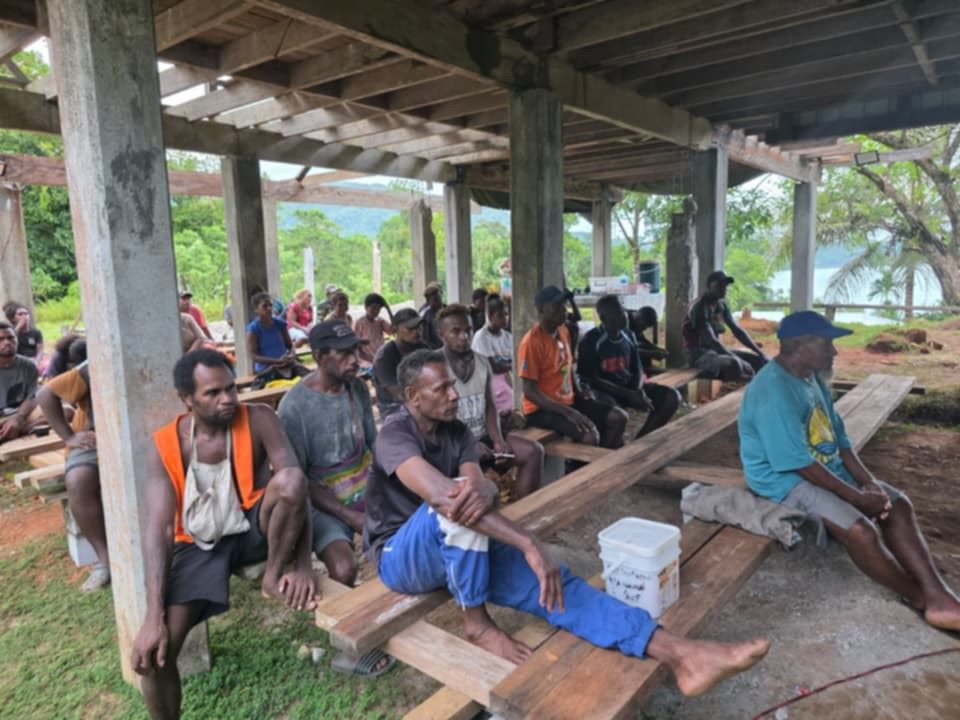
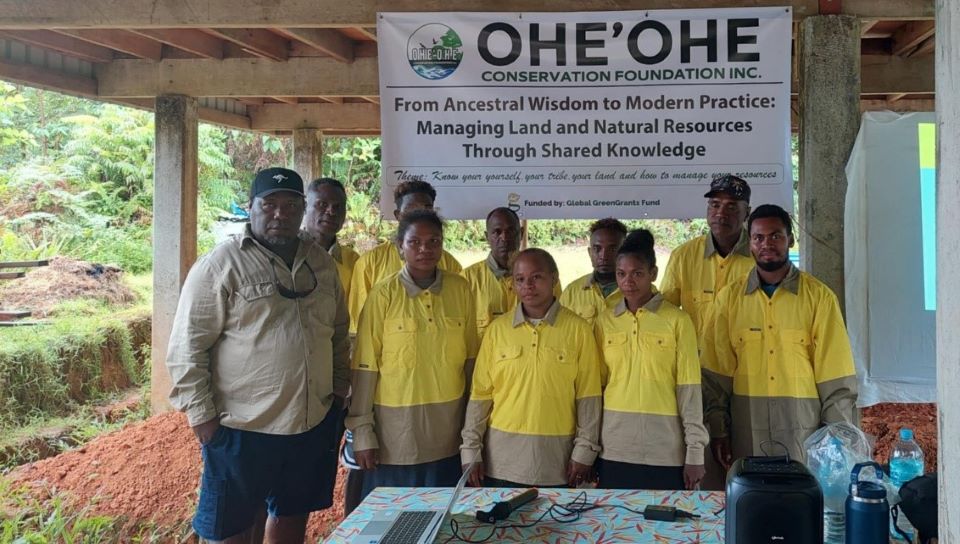
During the three-day period, the awareness workshop and advocacy initiative brought together forty-five participants from six communities, specifically Tora’o’o, Nariaoa, Raeao, Honoa, Harisi and Waipara. The program commenced on Monday, the 29th and wrapped up on New Year’s Eve, Wednesday, the 31st of December, with the objective of deepening the participants’ comprehension of Managing Land and Natural Resources. Furthermore, it aimed to bolster the knowledge of the OheOhe Conservation Foundation members. This three-day initiative created a platform for reflective learning and shared experiences among key community stakeholders, with the intention of advancing conservation while enhancing livelihoods.
The first day was officially inaugurated with welcoming remarks from the OCF Coordinator, which set a respectful and purposeful atmosphere for the program’s commencement. The sessions on the first day aimed to expand participants’ awareness of sustainable management practices concerning land, forests, freshwater systems, and marine resources. The presentations addressed the pressing environmental issues arising from overexploitation and inadequate resource governance. Participants were introduced to conservation principles and responsible decision-making practices, underscoring the theme: ‘From Ancestral to Modern Practices: Managing Land and Natural Resources through Shared Knowledge.’
Participants actively engaged in interactive discussions that promoted the exchange of traditional Ecological Knowledge and local experiences from chiefs, elders, and traditional knowledge custodians. Collectively, these sessions established a solid foundation for informed and sustainable resource management.
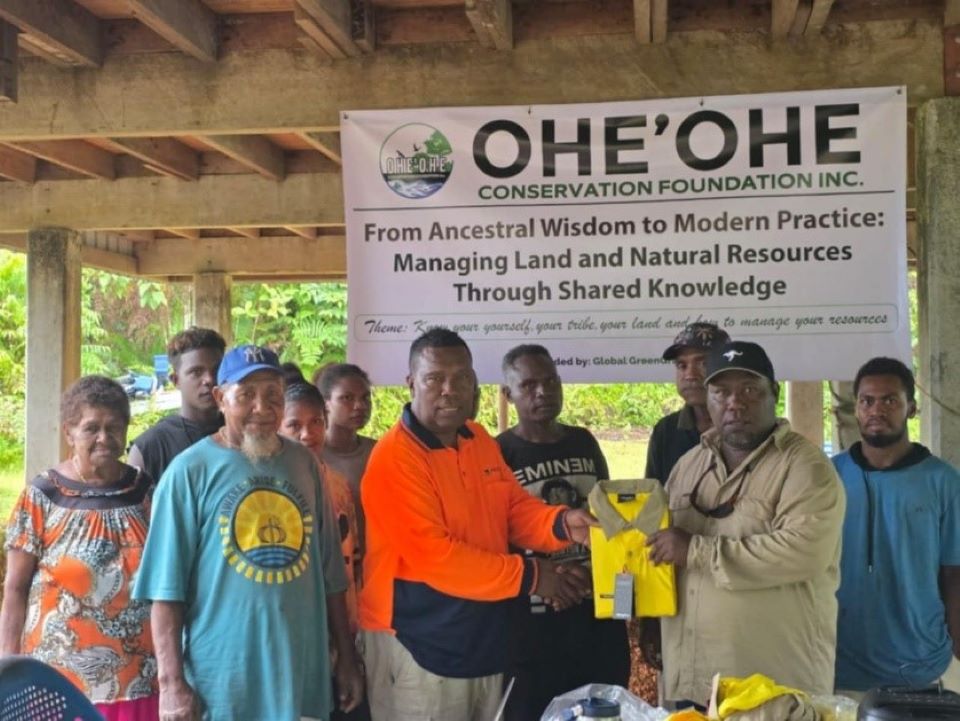
On the second day, the presentation of Ranger uniforms to OCF Rangers took place, with Edward Haikau Huitarau, the SI Rangers Program Manager and lead facilitator, formally presenting a set of Ranger uniforms to the OheOhe rangers. This act is a meaningful acknowledgment of the rangers’ role within OCF in safeguarding local natural resources while simultaneously reinforcing their identity and professionalism. One of the rangers expressed gratitude for this support, viewing it as motivation for ongoing dedication to conservation efforts.
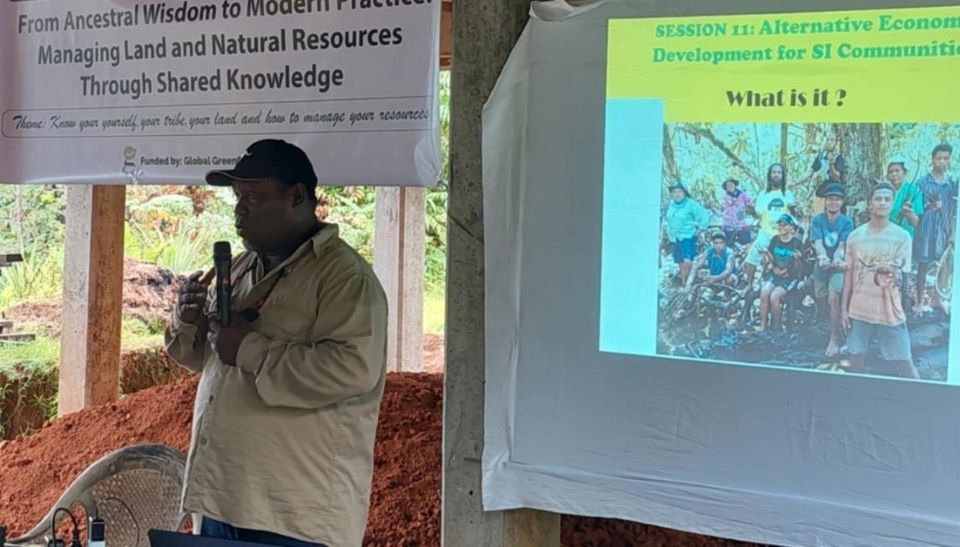
The facilitator, Mr. Edward Haikau Huitarau, highlighted that the significance of managing Natural Resources encompasses environmental protection, sustainable livelihoods, preservation for future generations, climate change resilience and community stability along with development planning.
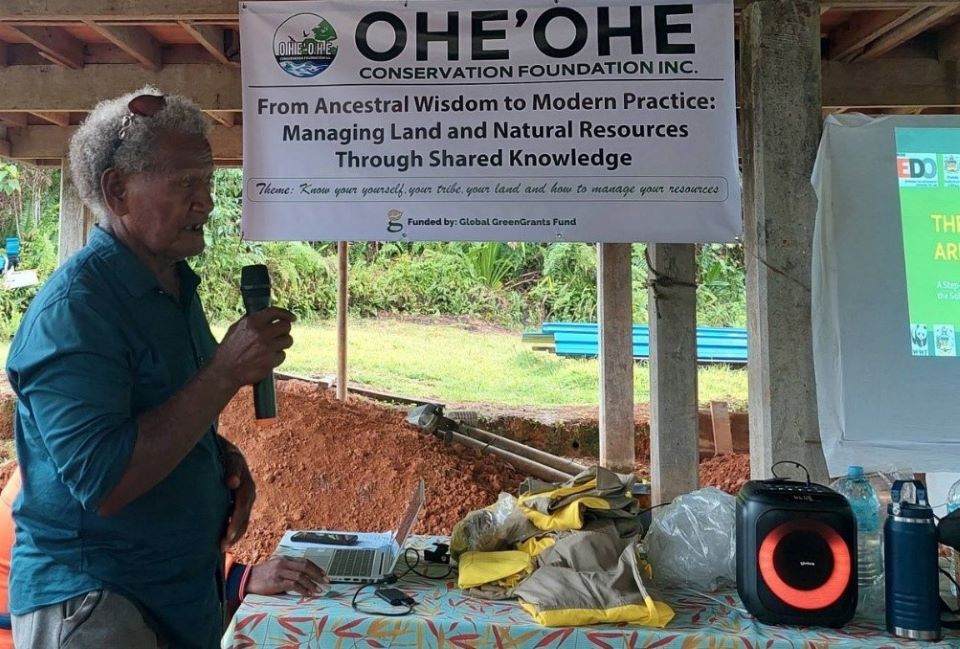
Chief Samuel Siriharu expressed his appreciation for the invitation from OCF. He acknowledged that he has had negative experiences with logging activities in the past, but he was pleased to learn that conservation programs offer the only viable path forward for future generations. With the increasing population, he emphasized that there is no other sustainable alternative.
He was pleased that OCF leaders took the initiative to secure their land for the benefit of future generations. He shared that he learned many new and modern concepts from the SI Rangers presentation, especially how these ideas align with the traditional knowledge passed down from his ancestors. He noted that conservation practices already existed during the time of their forefathers, but they were purely traditional and lacked structured initiatives such as organized workshops, involvement of NGOs, donors and other partners.
Day two focuses on alternative economic incentives as a means of reducing pressure on natural resources while supporting community livelihoods. Discussions highlighted the need to balance conservation objectives with economic growth. A new beginning for OCF and a new height for this innovative initiative that stands to fulfill its vision in terms of Resource Management Area. Alternative economic development is important for OCF for the these reasons; decline in natural wealth which is due to overreliance on natural resources has led to depletion, emphasizing the need for diversified income sources, economic and resource diversity-this means diversified economic activities increase resilience and reduce environmental pressure and finally, the need for Research where young generation of OCF can explore more opportunities by turning traditional knowledge and integrated knowledge from OheOhe into global knowledge. This supports informed sustainable development aligned with one of OCF conservation goals.
The second day’s presentation also centered on CBRM alongside the Conservation Approach, illustrating a practical journey towards Alternative Economic Development for our rural communities. Additionally, the session addressed the FIVE Categories of protected areas and their significance.
In the afternoon of the second day, participants learned about the Ancestral wisdom regarding Are’Are land tenure, which encompasses traditional knowledge about land usage, territorial criteria, and governance. This session was facilitated by the House of Chiefs along with representatives from its sub-tribes.
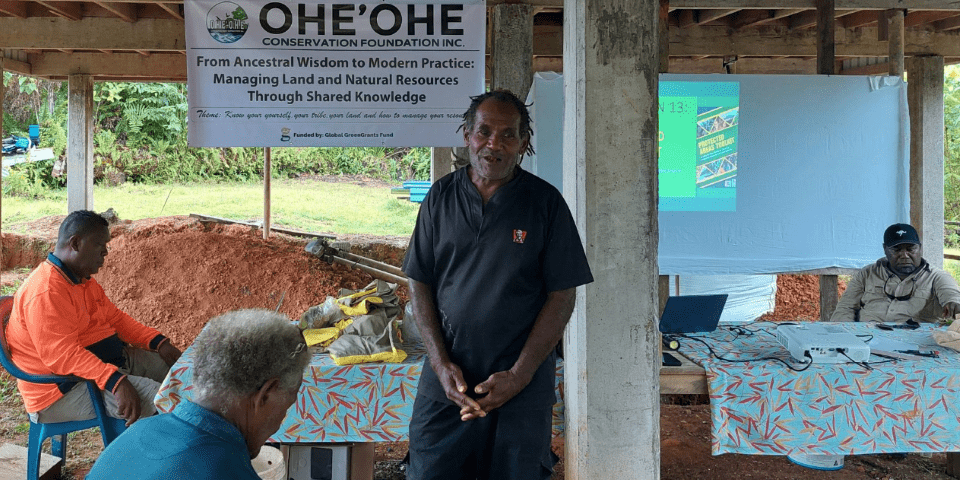
Chief Joe Hoatarau, in his capacity as a representative of the Rokohariharina House of Chiefs, he expressed strong support for more programs like this for tribes and their sub-tribes, especially after listening to the SI Rangers presentation. He emphasized that there are many opportunities for tribal members to benefit if resources are well managed and if communities continue to work collaboratively with SI Rangers and NGOs across the country.
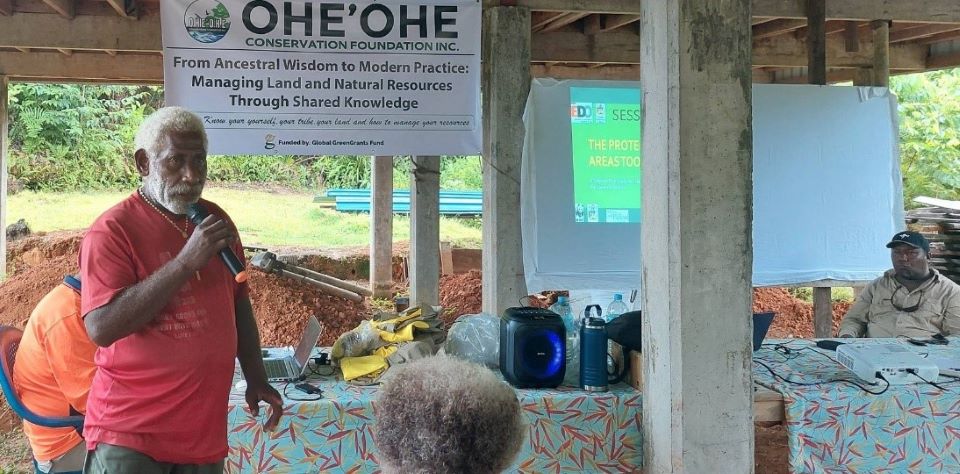
Ben Hanerara also acknowledged the Oheohe Conservation Foundation (OCF) for inviting him, in his capacity as a representative of the Namoaraha Council of Chiefs (NCC), to attend the workshop and to serve as a traditional knowledge resource person.
He commended OCF for being the first group to register and actively pursue this conservation program under Irora Tohutarau. The Namoaraha Council of Chiefs (NCC) is very supportive of tribal members and resource owners engaging in such programs, as they align with NCC values, particularly the integration of traditional and modern knowledge highlighted during the workshop.
The third day consisted of a hands-on session highlighting the importance of Mangrove ecosystems, successfully led by Ms. Hazel Pisihaniia Oatasia – Oheohe Conservation Foundation representative and Final year Environment student at the University of the South Pacific, who involved youths and junior rangers in planting Mangrove seedlings through a mangrove enrichment approach. Hazel led the youth in the mangrove planting activity, which marked the final component of the program. Through the workshop, she gained substantial practical knowledge. While she acknowledged that some of the information had been introduced during her studies at the University of the South Pacific (USP), she emphasized that the workshop provided extensive hands-on learning that enhanced her understanding. Hazel is preparing to pursue further studies after graduating in Semester 1, 2026 and plans to become a member of OCF to engage in research activities.
She also commended the SI Rangers workshop for being well presented and highly informative. She highlighted that the workshop enabled her to learn a great deal of new knowledge, integrating both ancestral and modern perspectives.
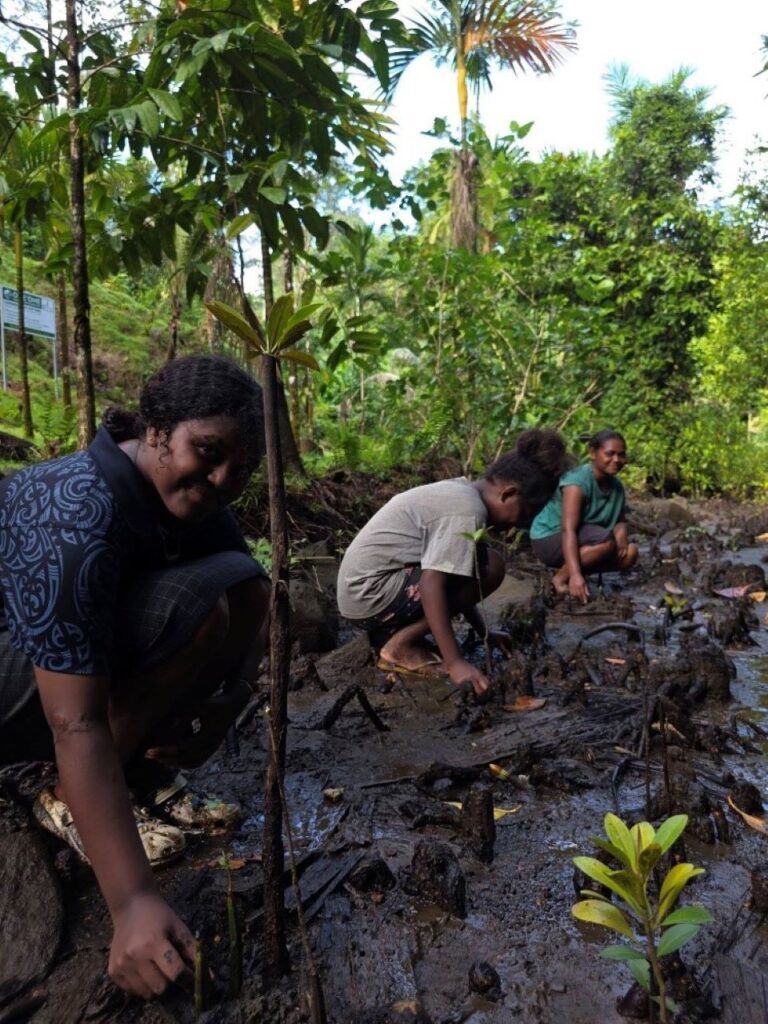
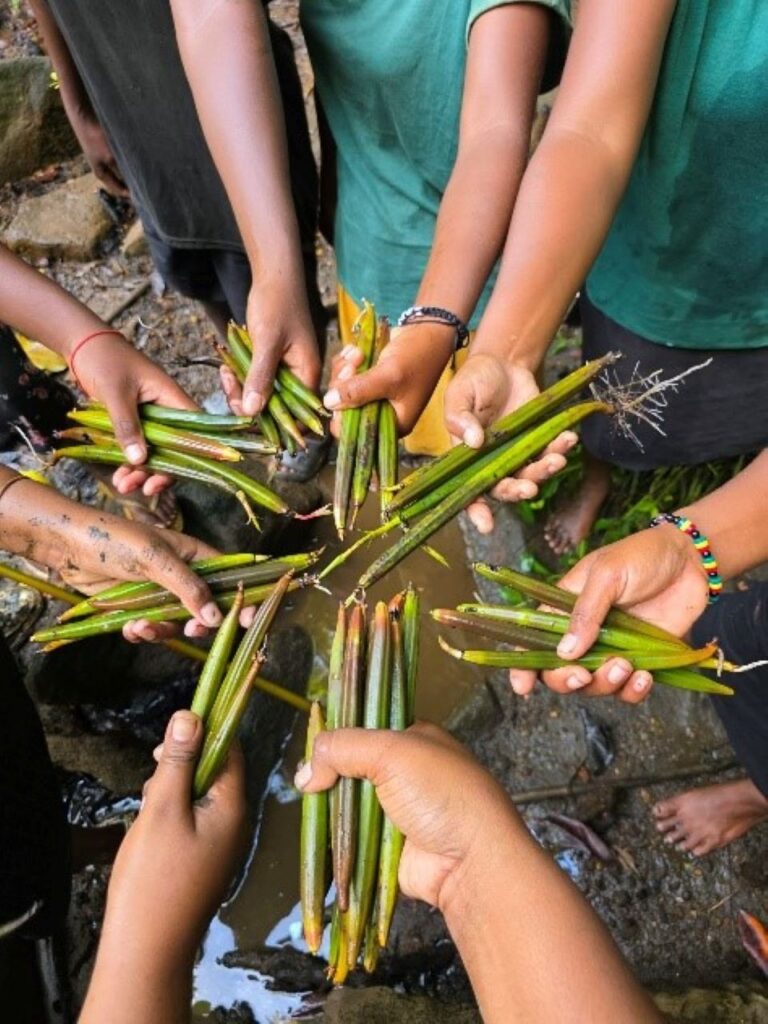
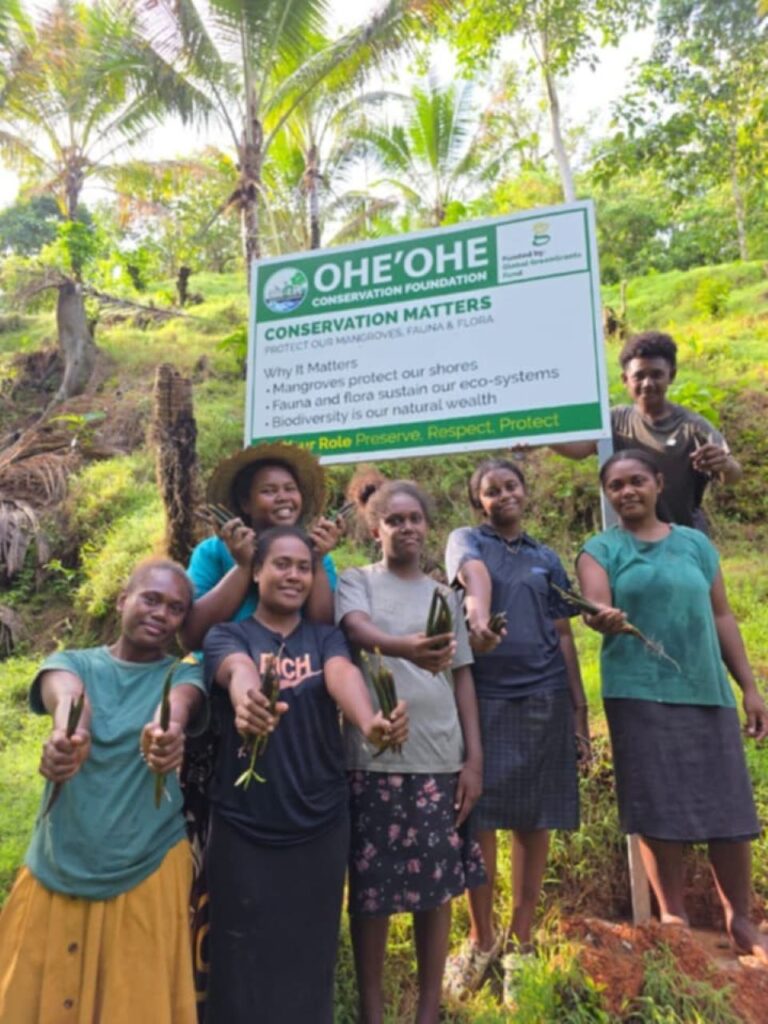
It’s a New Year’s Eve and the final day of 2025. December 31st, the final day of each calendar year, is always marked globally with parties, fireworks, music and gatherings as people welcome the new year at midnight with toasts and resolutions for self-improvement. But for OCF this day was a treecember final day as junior rangers engaged in planting mangrove seedlings around the mangrove ecosystem of OheOhe. It’s a time for reflection on their past year and hope for the future green mangrove forest. And as the year draws to a close, these junior rangers of OCF are reflecting on their beginnings and steadily advancing with a determined spirit to preserve Ohe’Ohe land for future generations. Moreover, they are also looking forward to new roots they will establish in 2026 as they continue to progress.
The three days of conservation advocacy campaign has successfully highlighted the strong link between environmental conservation and sustainable development. Participants gained practical knowledge and renewed commitment to managing natural resources responsibly.
Lead facilitator, Huitarau reminded them that environmental efforts are intricately linked to the survival and well-being of local communities, many of which heavily depend on natural resources. Your initiative transcends mere protection of flora or fauna; it is about lives — the lives of individuals who rely on the land, forests, freshwater and seas.
OCF has set the scene for its tribal members as they successfully implemented these activities in partnership with Solomon Islands Rangers Association with the small grant funding support from Global Greengrant Fund (GGF).
Source: Ohe’Ohe Conservation Foundation (OCF),