
BY JOY OFASIA
Gwaunafiu Organic Learning Farm in Malaita Province is sharing its experience in promoting sustainable agriculture, protecting biodiversity and strengthening food security in the Solomon Islands at a regional learning workshop in Fiji.
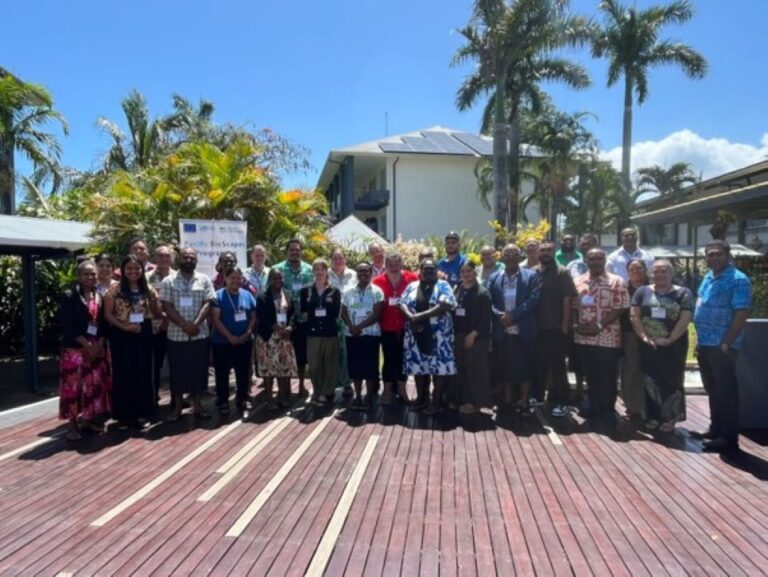
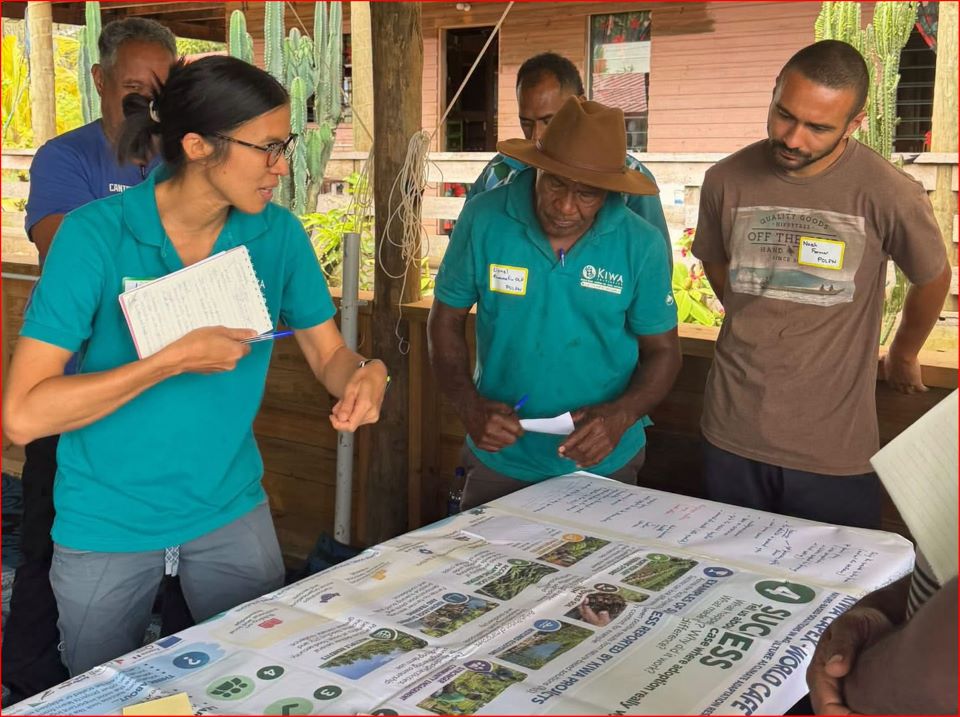
Farm advisor Leslie Sanga and Lionel Maeliu represented the farm at the CAPEX Kiwa Learning Workshop in Bua, Fiji, bringing together farmers, technical experts and stakeholders from across the Pacific to exchange knowledge and experiences in organic farming.
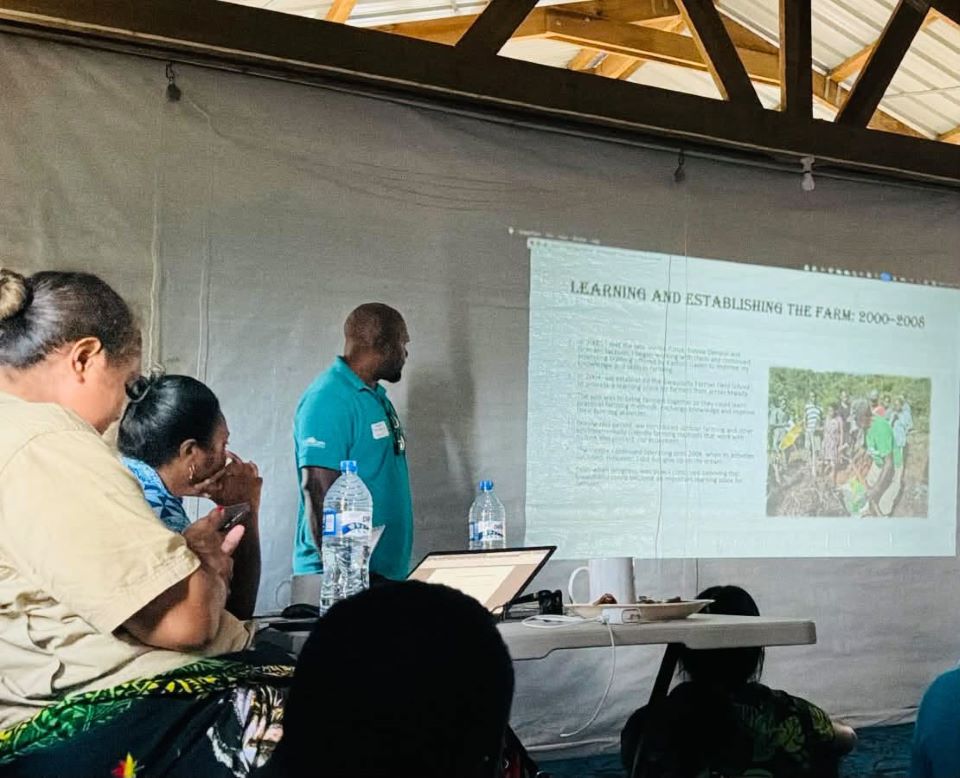
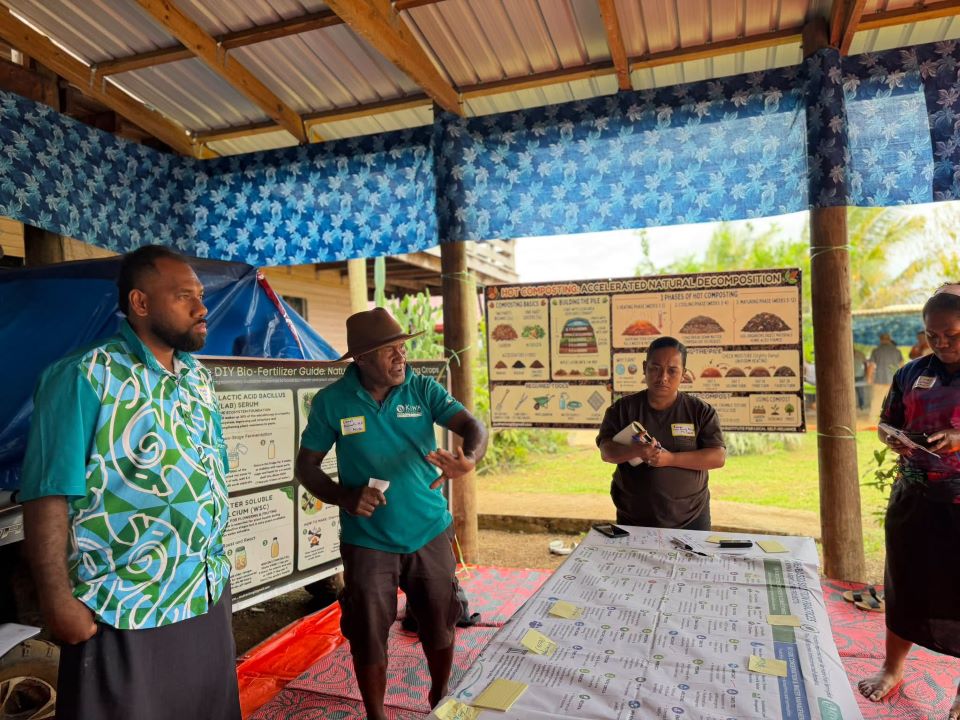
In an interview with ENVIRONMENT MEDIA, Sanga said the workshop provided an important opportunity to share Gwaunafiu’s progress, challenges and vision for strengthening organic farming in the Solomon Islands.
“Gwaunafiu Organic Learning Farm is based in Malaita Province, about 16 kilometres from Auki town. Our main work is promoting organic farming, training farmers, protecting biodiversity, improving soil health, and encouraging communities to produce healthy food using environmentally friendly farming practices,” he said.
Among the farm’s key achievements are improvements to its facilities, including an administration block, irrigation system, poultry house and other farming infrastructure, with support from the Kiwa Initiative, the Pacific Organic Learning Farms Network (POLFN) and the Pacific Community (SPC).
The farm has also established various activities, including taro research, composting, contour farming, fruit tree planting and the conservation of traditional taro varieties. Around 400 coconut trees have also been planted as part of its ongoing farming and environmental conservation efforts.
Another important development is the arrival of three agriculture students from Gwaigeo who will undertake seven months of practical attachment at the farm.
Sanga said the opportunity demonstrated the farm’s commitment to developing future farmers while providing practical learning experiences for young people.
“We are not only growing food; we are also developing the next generation of farmers,” he said.
However, he noted that access to practical training, farming tools, reliable water supplies and resources remained among the challenges facing organic farmers in the Solomon Islands.
Through demonstrations and training, Gwaunafiu promotes practices such as compost making, cover cropping, soil conservation and the use of organic materials to improve soil fertility.
Sanga said changing perceptions of agriculture among young people was also important, as farming could provide opportunities for income generation, food security and rural development.
He emphasised that building a successful organic learning farm required patience, commitment and long-term dedication.
“One of the biggest lessons we shared is that building a successful organic learning farm takes time, patience, and commitment,” he said.
He also highlighted the importance of combining traditional knowledge with practical farming techniques and protecting natural resources for future generations.
Looking ahead, Gwaunafiu aims to strengthen its role as a practical training centre for farmers, students and rural communities while expanding its training programmes, taro conservation work and sustainable farming practices.
Sanga said the knowledge and partnerships gained through the regional workshop would help improve local farming practices and could be shared with communities through demonstrations and farmer-to-farmer exchanges.
“The knowledge and connections we gain here can be brought back to the Solomon Islands and shared with local farmers through practical training, demonstrations, and farmer-to-farmer exchanges,” he said.
He acknowledged the support of the Kiwa Initiative and its partners in improving the farm’s facilities and strengthening its capacity to deliver training.
Sanga said the farm’s long-term vision was not only to develop Gwaunafiu but also to contribute to stronger organic farming practices throughout the Solomon Islands and a more resilient Pacific.
“For us at Gwaunafiu, the message is clear: grow with nature, feed the soil, and protect the future,” he said.
The work is supported by the Kiwa Initiative through the Pacific Organic Learning Farms Network (POLFN), which supports knowledge-sharing and learning among organic farming projects across the Pacific.