
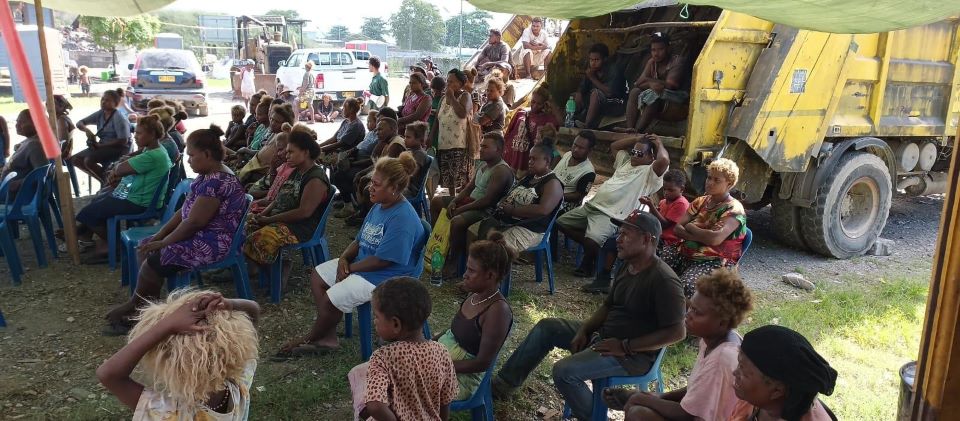
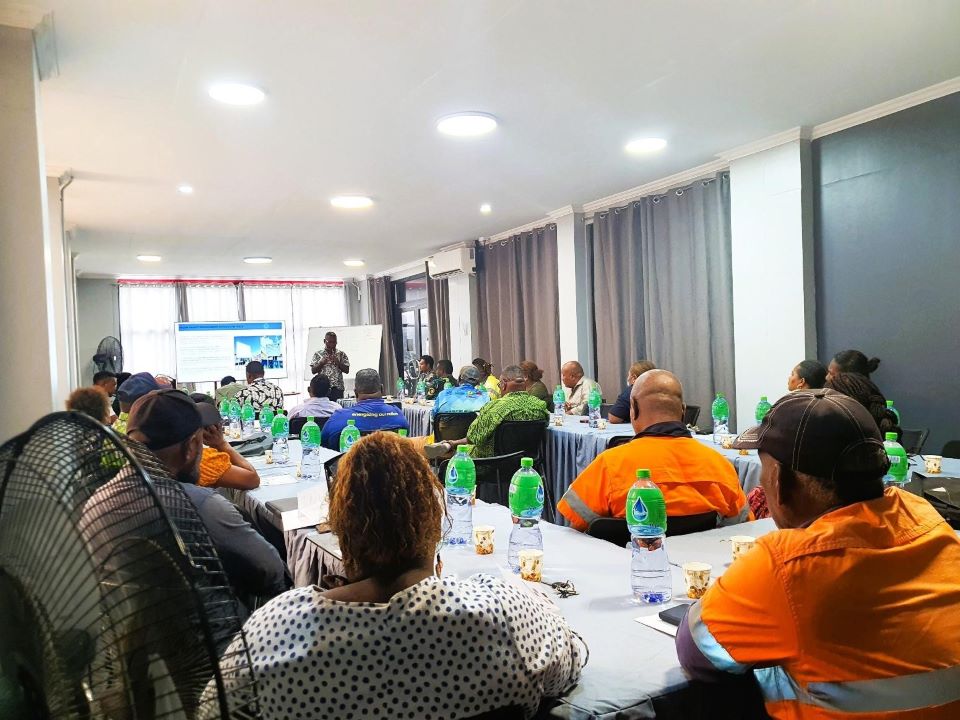
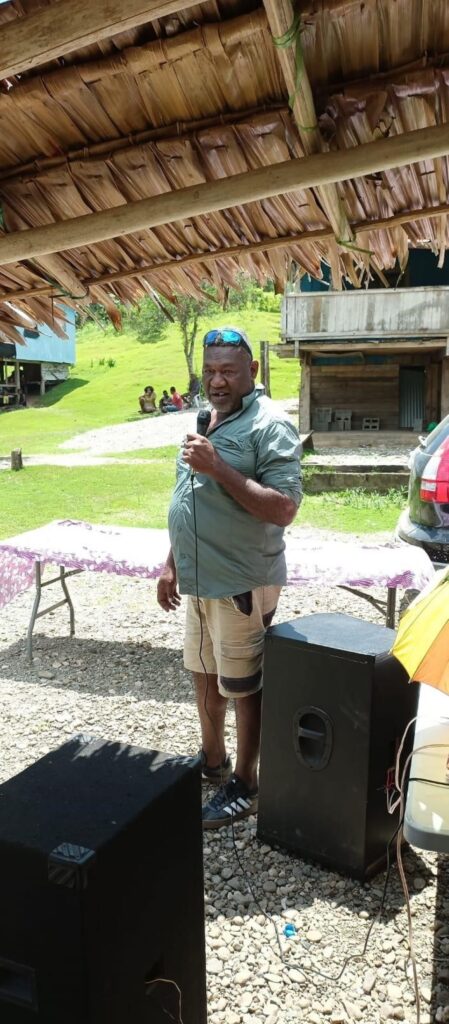
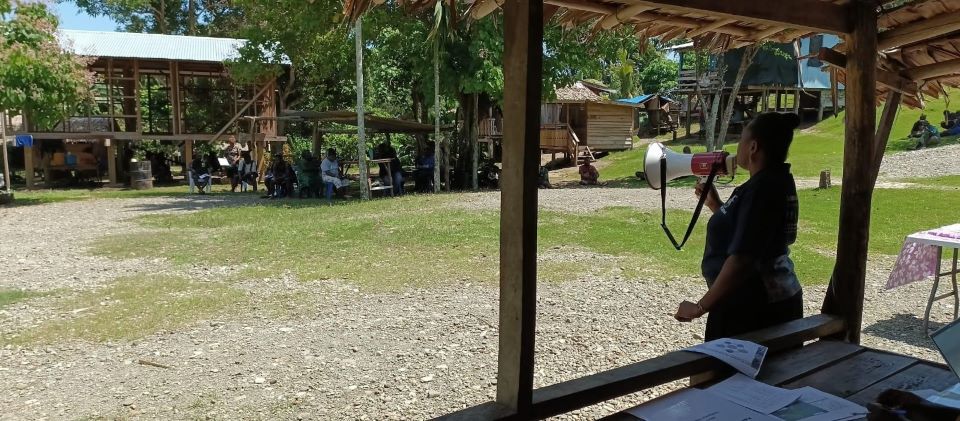
Two days of public hearings for the Integrated Solid Waste Management Project (ISWMP) for Climate and Disaster Resilient Honiara were carried out on 10 and 11 September 2026. The public hearings were facilitated by MECDM together with HCC, GPG and Project Management Unit (PMU) staff, to provide an important opportunity for communities and stakeholders to learn more about the proposed project and share their views, concerns and recommendations and in particular with regards to the project’s Environmental Impact Statement.
The Project aims to strengthen Honiara’s waste management systems, improve service delivery and expand access to appropriate waste management services across the Greater Honiara Area. The project builds on the national government’s efforts to improve solid waste management in Honiara following the government’s establishment of the Solid Waste Management Steering Committee in July 2021 to lead implementation of the Roadmap for Improving Solid Waste Management for Honiara Area 2021–2032.

Funded by ADB with a value of US$19.41 million, the project is implemented by three agencies: the Honiara City Council (HCC), Guadalcanal Provincial Government (GPG) and the Ministry of Environment, Climate Change, Disaster Management and Meteorology (MECDM), as the lead implementing agency.
The project focuses on two major areas:
1. Developing climate-resilient and sustainable waste infrastructure
The project will support the construction of a new landfill at Tenaru, development of a Waste Transfer Station at the existing Ranadi dumpsite, and the establishment of city-wide recycling and resource recovery systems.
2. Strengthening governance, service delivery and community engagement
The project will support improved waste collection services and provide essential waste management equipment, while strengthening tariff and cost-recovery systems, hazardous waste regulation and community education and awareness programs, including targeted outreach to women.
Together, these activities aim to contribute to a more efficient, inclusive, sustainable and climate-resilient waste management system for the Guadalcanal Province.
The new landfill at Tenaru will incorporate a range of protection measures to reduce potential risks to surrounding communities and the environment. These include specially designed stormwater drainage systems to manage surface-water runoff, a geosynthetic clay liner (GCL) system to help prevent toxic liquids and gases from escaping into the surrounding environment, and landfill gas management and flaring systems to safely manage methane and other gases generated by decomposing waste. Visual barriers such as tree planting and fully secured fencing and security will be implemented to control movement of people and vehicles into the landfill.
The dumpsite at Ranadi will be rehabilitated and a waste transfer station constructed at the site for the sorting and segregation of waste, before the unusable waste is disposed of at the new Tenaru landfill.
During operation, waste will firstly go through segregation, sorting and recycling processes at the Waste Transfer Station at Ranadi. Only residual, non-recyclable and otherwise approved waste will be transported to the Tenaru landfill for final disposal.
These measures are intended to provide a significantly more controlled approach to waste disposal and help reduce potential environmental and social risks associated with unmanaged or poorly controlled waste disposal.
Speaking during the public hearings, Deputy Director of Environment Conservation Division of MECDM, Ms. Debra Kereseka, highlighted that the hearings are an important step under the Environment Act prior to the issuing of Development Consent.
Communities and stakeholders were encouraged to actively participate in the process. Their comments, concerns and recommendations are important and will form part of the environmental assessment record as well as conditions of the Development Consent.
The public hearings over the two days were held at Kolina 1, Ranadi Landfill and Mataniko Plaza Conference Room, bringing together surrounding communities, government ministries, SOEs, NGOs, businesses, civil society groups and members of the general public.
Speaking at the conclusion of the hearings, PMU Head Mr. Noel Orudiana thanked members of the communities from Belaha, Kolina 1 and 2, Ailama and the Bloody Ridge areas, as well as representatives from government agencies, NGOs and other stakeholders, for their participation and contributions.
Mr. Orudiana said the project team would take on board all comments and concerns raised during the hearings and seek to incorporate them into the project’s implementation plans and activities and future operation, to help address environment and social issues and ensure that the project delivers meaningful benefits to communities and livelihoods. Mr. Orudiana also encouraged anyone who may have concerns regarding any aspects of the project to raise them through the project’s grievance mechanism or to visit their project’s head office at HCC for further information.
He assured that further consultations and meetings will be carried out with landowners, surrounding communities and relevant stakeholders as the project progresses. This continued engagement will be important to ensure that community perspectives remain part of the project’s development and implementation.
Source: MECDM Press Release