
The Solomon Islands has yet to formally submit its National Adaptation Plan (NAP) to NAP Central, the official portal managed under the United Nations Framework Convention on Climate Change (UNFCCC).
An official from the Ministry of Environment, Climate Change, Disaster Management and Meteorology (MECDM) confirmed that work on the country’s National Adaptation Plan is ongoing and is expected to be completed soon.
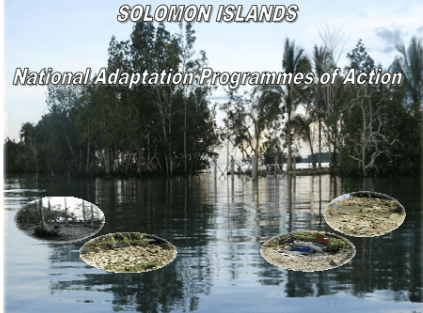
The Solomon Islands National Adaptation Plan (NAP) 2025-2029 aims to strengthen the country’s long-term resilience to climate change across all nine provinces. Reports indicate that the core implementation and development phase runs from January 2025 to January 2029, with a comprehensive final strategy expected to be completed by 2028.


The initiative is being supported through the Strengthening Inclusive Adaptation Capacity in Solomon Islands (SIAC) project, a $27.5 million program funded by the Australian Government and implemented in partnership with the Global Green Growth Institute (GGGI).
Key priority sectors identified under the plan include infrastructure, water and sanitation, agriculture, fisheries, forestry, health, education, waste management and meteorological services.
The NAP also incorporates findings from the Solomon Islands Integrated Vulnerability and Adaptation Assessments (SIIVA) conducted in provinces including Isabel and Makira, ensuring that community priorities and customary land considerations are reflected in adaptation planning.

Globally, 93 Parties to the UNFCCC have submitted National Adaptation Plans. However, only 17 of the 39 Small Island Developing States (SIDS) have completed and submitted their plans.
Speaking at the Baku High-Level Dialogue on Adaptation during the COP31 process in Antalya, Turkey, on Monday, Minister of Environment, Climate Change and Emergency Management of the Federated States of Micronesia (FSM), Hon. Florian J. Yatilman, delivered a statement on behalf of the Alliance of Small Island States (AOSIS), highlighting the urgent need to close this gap.
She stressed that dedicated support is required for both the development and implementation of NAPs across Small Island Developing States.
“Early warning systems are equally critical,” Minister Yatilman said.
“Disaster-related deaths are nearly six times lower where comprehensive systems exist, yet only 43 per cent of SIDS have such coverage. Universal coverage by 2027 must be prioritised.”
She also emphasized the need for increased grant-based climate finance, stronger national institutions and long-term adaptation programs.
“We must move beyond fragmented, short-term projects towards multi-year, programmatic support, with simplified direct access, harmonised accreditation and reduced administrative burdens,” she said.
The FSM minister further called for measures to protect the fiscal space of vulnerable island nations through climate-resilient debt clauses and debt-for-climate swaps.


Among AOSIS’ key priorities heading into COP31 are:
- A credible pathway to triple global adaptation finance.
- Dedicated funding support for every SIDS seeking to formulate and implement National Adaptation Plans.
- Ensuring the Global Goal on Adaptation drives practical implementation rather than creating additional barriers to accessing finance.
- Translating the findings of the Belém Mission into practical support mechanisms for SIDS and Least Developed Countries (LDCs).
Minister Yatilman said adaptation funding must reach communities facing the greatest climate risks.
“This requires strengthening national institutions, enabling locally led adaptation and scaling up grants and highly concessional finance. Early warnings must also trigger early action through pre-arranged financing,” she said.
She warned that some island communities are rapidly approaching the limits of adaptation, underscoring the need to adequately resource the Fund for Responding to Loss and Damage, including through its planned replenishment in 2027.
“For some island communities, these limits are approaching rapidly. The Fund for responding to Loss and Damage must therefore be adequately resourced,” she added.
As Solomon Islands continues developing its National Adaptation Plan, climate advocates and development partners say timely completion and implementation will be critical in helping communities prepare for increasing climate-related risks across the country.
Source: Eddie Osifelo, Antalya, Turkey.