

ANTALYA, TURKEY : Members of the Pacific Islands Students Fighting Climate Change (PISFCC) have reflected on the landmark Advisory Opinion on climate change delivered by the International Court of Justice (ICJ) in The Hague, Netherlands, on July 23, 2025.
The reflections were shared during a side event at the 31st Conference of the Parties (COP31) to the United Nations Framework Convention on Climate Change (UNFCCC) in Antalya, Turkey, on Monday.
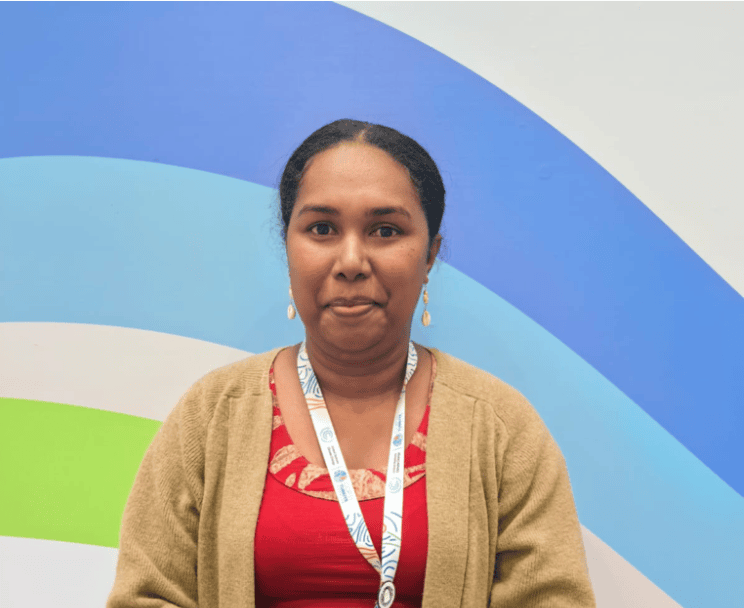
One of PISFCC’s founding executive members, Belyndar Maonia Rikimani of Solomon Islands, said the ICJ Advisory Opinion represents a significant milestone because it frames climate harm not merely as an environmental issue, but as a matter of international law, human rights, justice, and State responsibility.
“The Court recognises that greenhouse gas emissions have caused significant harm to the climate system and the environment, including rising temperatures, sea-level rise, extreme weather events, and damage to ecosystems and biodiversity,” Ms Rikimani said.


She noted that for Pacific communities, climate change is already having profound impacts on daily life and cultural identity.
“For Pacific communities, climate harm means losing ancestral lands, freshwater sources, agricultural land, and marine ecosystems that sustain our livelihoods, food security, and cultural practices.
“It also means losing cultural heritage, traditional knowledge, ancestral burial grounds, and sacred places. These are losses of identity, belonging, and our connection to land and ocean.”
Ms Rikimani said climate change threatens much more than physical territory.
“It is about the potential loss of our cultures, identities, sovereignty, and the ability of future generations to inherit and maintain their lands, languages, and traditions.
“This is why the Court’s recognition of the relationship between climate change and fundamental human rights is so significant. It affirms that climate harm is ultimately about people, their rights, and their ability to live with dignity.”
She said the Advisory Opinion is particularly important because it clarifies that States already have legal obligations under international law to prevent significant harm to the climate system and the broader environment.
According to PISFCC, several key responsibilities now require urgent attention from governments.
First, States have a stringent due diligence obligation to prevent significant climate harm. This includes aligning domestic laws, policies, investments, and energy pathways with international legal obligations, taking appropriate action on fossil fuel production, consumption, exploration, and subsidies, and ensuring the global goal of limiting warming to 1.5°C remains achievable.


Second, States must strengthen adaptation efforts, address loss and damage, and ensure affected communities receive adequate support. For Pacific Island countries, this includes improved access to sufficient and predictable climate finance.
Third, governments must place people and communities at the centre of climate action by protecting fundamental rights to life, health, food, water, housing, and culture, while ensuring meaningful participation of Indigenous peoples, women, and youth.
Finally, PISFCC says States must reflect the Court’s findings in national policies, climate commitments, negotiations, and financial decisions, while ensuring frontline communities help shape implementation.
Ms Rikimani stressed that every fraction of a degree of warming carries serious consequences for Pacific nations.
“For Pacific Island communities, every fraction of a degree represents increased risks of sea-level rise, coastal erosion, displacement, and irreversible loss and damage,” she said.
“The International Court of Justice’s 2025 Advisory Opinion is unequivocal in recognising that the standard of due diligence required to prevent significant harm to the climate system is stringent.”
She added that the Court affirmed States must exercise their highest possible ambition in preparing and implementing their Nationally Determined Contributions (NDCs) in line with the 1.5°C target.
“This means that overshoot cannot be treated as an acceptable policy outcome or as an excuse for continued fossil fuel expansion. States must act on the best available science and align their commitments with the 1.5°C goal,” she said.
“For the Pacific, climate harm is an ongoing reality that our communities are already living with.”
Ms Rikimani said the Advisory Opinion provides a critical legal foundation for holding States accountable and affirming that the harm experienced by climate-vulnerable communities is neither inevitable nor an acceptable cost of economic development.
Looking ahead to COP31, PISFCC has identified several priority areas.
The first is maintaining the global commitment to limiting warming to 1.5°C.
“For Pacific peoples, 1.5°C is not simply a negotiating target; it is a matter of survival,” Ms Rikimani said.
The second priority is ensuring the ICJ Advisory Opinion moves beyond recognition and into implementation through national policies, climate commitments, and international negotiations.
Third, climate finance, adaptation measures, and loss-and-damage mechanisms must better respond to the realities faced by climate-vulnerable communities.
Fourth, Pacific leadership and meaningful participation must remain central in climate negotiations.
“Pacific countries, Indigenous communities, and young people must not simply be present in these negotiations; their perspectives and priorities must influence the decisions being made,” she said.
Finally, PISFCC is calling for efforts beyond COP31 to ensure the Advisory Opinion informs future global climate processes, including the Second Global Stocktake.
“We need to ensure that the legal obligations clarified by the Court inform how the international community assesses collective progress and strengthens future climate action,” Ms Rikimani said.
Ms Rikimani holds a Bachelor of Laws and a Professional Diploma in Legal Practice from the University of the South Pacific. She currently serves as Secretary to the Trade Dispute Panel under the Solomon Islands Ministry of Commerce, Industry, Labour and Immigration, where she focuses on labour law and employment disputes.
Source: EDDIE OSIFELO ,Antalya, Turkey