
Minister of Environment, Climate Change, Disaster Management and Meteorology (MECDM), Wayne Osopo Ghemu, has called on development partners to transform climate finance pledges into tangible results through timely capitalization of the Pacific Resilience Facility (PRF).
His remarks come as the PRF Treaty, signed by Pacific Islands Forum (PIF) leaders on September 10, 2025, during the 54th Pacific Islands Forum Leaders Meeting in Honiara, remains below its capitalization target.
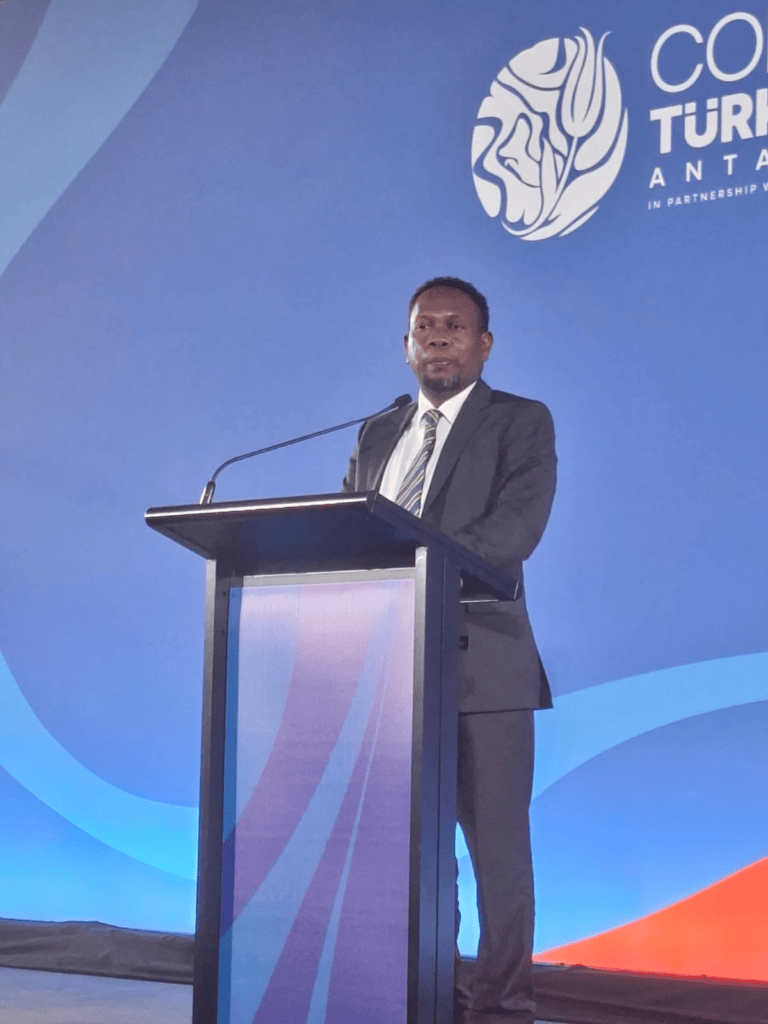
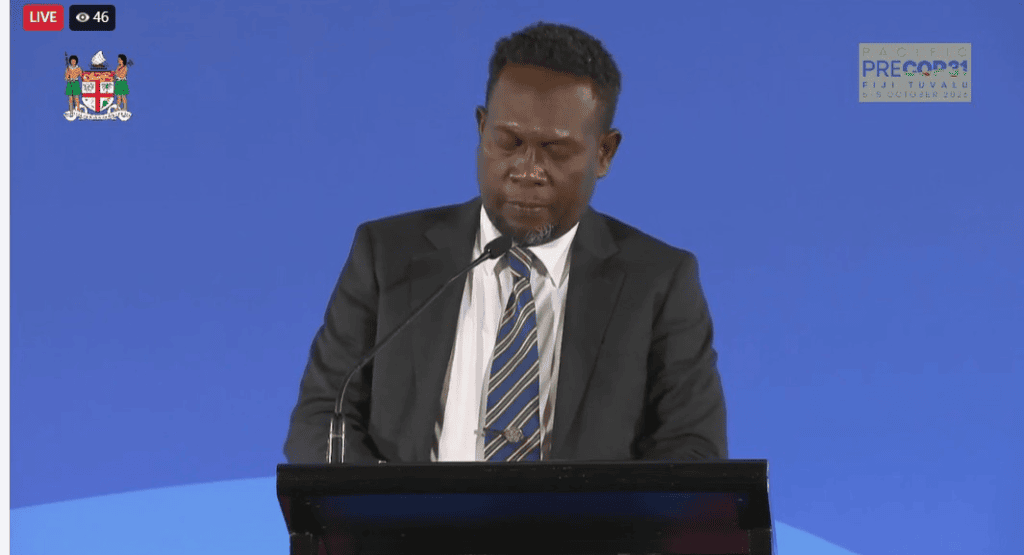
Speaking on the theme “Turning Climate Finance into Community Resilience” during a side event at the Pre-COP31 meeting held at the Sheraton Hotel in Denarau, Fiji, on Wednesday, Minister Ghemu highlighted the urgent need for financial commitments to be converted into actual contributions.
“As of September 2026, total pledges stand at US$179.4 million against a target of US$320 million,” he said.

“Of that amount, only US$14.6 million has been paid or is in the process of being paid. That is less than five per cent of the target. Another US$84.5 million has payment arrangements in place, while US$80.3 million remains outstanding. More than US$140 million has yet to be pledged.”
Minister Ghemu represented Prime Minister Matthew Wale, who had returned to Solomon Islands.
“The families whose wells have turned salty cannot afford to wait. Pledges must be converted into paid-in capital within agreed timeframes,” he said.
“We urge our friends and development partners to make new commitments and help capitalise the fund.”
The Minister announced that the Solomon Islands Government would contribute an initial US$1 million to the PRF as a demonstration of its commitment to a Pacific-led solution.
“The PRF will help overcome the complex, slow, piecemeal and often inadequate financing arrangements currently available to the region,” he said.
“We are confident that the PRF will draw on lessons learned from the CROP experience in accessing climate finance. It cannot become another mini-Green Climate Fund (GCF) or just another regional agency.”
Minister Ghemu said the establishment of the PRF sends a strong signal that the Pacific is not only prepared to confront climate change but is also committed to leading innovative solutions that reflect the region’s values and resilience needs.
“Climate change is not a distant forecast. It is already affecting our communities,” he said.
“It is the saltwater contaminating gardens. It is the cyclone that tears the roof off a classroom. It is the reef that no longer supports a village’s food supply.”

He noted that the recent impact of Tropical Cyclone Maila, which caused more than US$30 million in damages, underscored the need for climate finance that is accessible, responsive and fit for purpose.
“The international climate finance architecture remains overly complex, slow, fragmented and insufficiently responsive to the needs of our communities,” he said.
Minister Ghemu also called for the adoption of the Multi-Dimensional Vulnerability Index (MVI) as a tool to recognise the special circumstances of Small Island Developing States (SIDS) and unlock greater access to both development and climate finance from public and private sources.
He described the Pacific Resilience Facility, which is designed, governed and delivered by Pacific nations, as a source of hope for vulnerable communities across the region.
“We are encouraged that the PRF, through an existing UNDP financing facility, is already supporting community projects in nine Pacific countries in areas such as water security, food security, sanitation, waste management and coastal resilience,” he said.
Minister Ghemu said the PRF would ultimately be judged by its ability to deliver climate-resilient outcomes, including reliable access to clean water, secure food supplies and livelihoods, protected coastlines, effective early warning systems, resilient infrastructure and stronger health systems.
“That is how the PRF will be measured, and we invite you to hold us accountable,” he said.
Source : Eddie Osifelo
Nadi, Fiji