

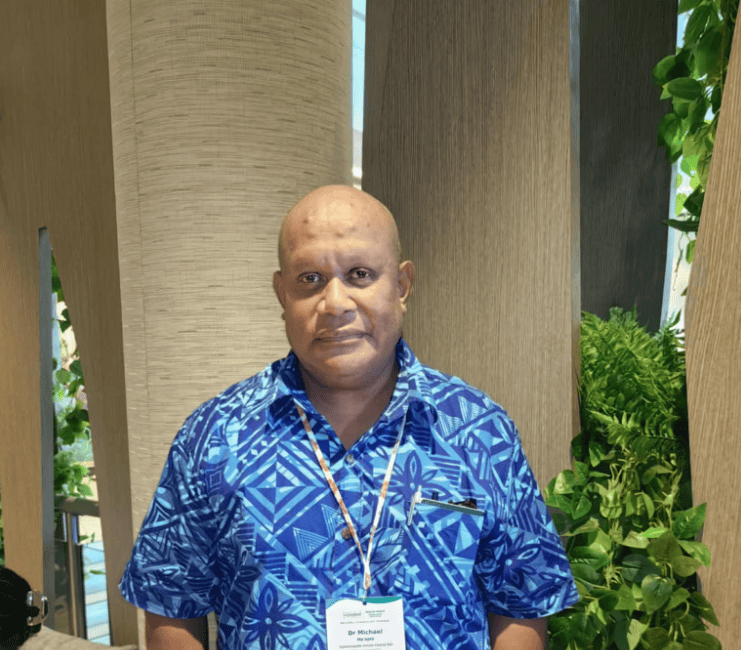
A Solomon Islander, Dr Michael Oto’ara Ha’apio, is promoting the Commonwealth Climate Finance Access Hub (CCFAH) at the Pre-COP31 Meeting in Nadi, Fiji.
The CCFAH is an initiative established by the Commonwealth in 2015 to help small and vulnerable countries access international climate finance. It specifically supports Small Island Developing States (SIDS) and Least Developed Countries (LDCs) by addressing capacity gaps that often limit their ability to secure climate funding.
Dr Ha’apio, who served as the Commonwealth Climate Finance Adviser to the Government of Kiribati in 2025, said he is in Nadi to present on climate finance access and how small island nations can transform their Nationally Determined Contributions (NDCs) and National Adaptation Plans (NAPs) from policy commitments into investable projects.


He is representing the Commonwealth on behalf of his Director-General.
“The message we want to share with the world is clear: convert climate commitments into capital so they can be integrated into our resilience systems.
This is the focus of my presentation and the key message I want to convey. As governments negotiate, the Commonwealth remains committed to supporting Small Island Developing States in securing the resources they need to build resilience across the Pacific and other vulnerable regions,” Dr Ha’apio said.
Dr Ha’apio also commended Solomon Islands Prime Minister Matthew Wale for attending the Pre-COP31 meeting in Nadi.
“This is the first time a Solomon Islands Prime Minister has attended a meeting of this kind.
The leadership and commitment demonstrated by the Prime Minister are encouraging. While accessing climate finance is important, engagement at the highest political level is equally critical.
Such commitment speaks volumes, and now we must work to translate these commitments into real financial support and investments,” he said.
Dr Ha’apio added that preparatory work is underway to strengthen pathways for accessing climate finance, including opportunities for Solomon Islands to secure additional funding.
Currently, Solomon Islands has benefited from several international climate financing mechanisms, including the Green Climate Fund (GCF), the Adaptation Fund, and the Global Environment Facility (GEF).
However, he emphasized that more accessible funding is needed.
“We need greater access to climate finance, particularly funding mechanisms that are not overly complex or difficult to access.
We do not want communities waiting five years for project approvals. Instead, we need processes that enable funding to be approved within one or two years so implementation can begin quickly and deliver tangible benefits to our people,” he said.
Dr Ha’apio stressed that improving access to climate finance remains essential for strengthening resilience and supporting sustainable development across Solomon Islands and other Pacific island nations.
Source : EDDIE OSIFELO, Nadi, Fiji